Catching Up With Benriach: An Interview With Master Blender Rachel Barrie

Dr. Rachel Barrie, Master Blender (2).jpg

Back in 2012, when podcasting was more of an amateur hobby rather than a full-fledged career path, I hosted a tiny show about whisky that interviewed notable personalities from distilleries all over the spirits world. One of my first guests was Rachel Barrie, at that time the master blender for Ardbeg. Almost all the press surrounding Ardbeg back then involved the brilliant Dr. Bill Lumsden and his penchant for whisky creation, but I was interested in learning more about Rachel’s blending.

Given that Ardbeg’s flagship whisky—the Uigeadail—is a complex marriage of whiskies of various ages, maturations, and proofs, I thought the woman who had brought harmony to that force must be quite the wizard.

Indeed she is.

After working a few Ardbeg-related whisky events with Rachel in San Francisco, I wouldn’t see her again until driving out to Glen Garioch to work on a new single barrel program. Rachel had been hired as the master blender for Morrison-Bowmore and was working out of the Highland location. I remember it well because she said the cask I chose reminded her of “mealy,” sort of like stuffing made with oatmeal and grains instead of breadcrumbs. We ended up grabbing lunch right after that a local cafe that served mealy because I was utterly transfixed with understanding her tasting note.

That was the last time I had contact with Rachel until just recently, when I connected with her for this interview. Like myself, she’d been head-hunted yet again, taking the reigns as the master blender for Brown-Forman’s Scottish distillery trio of Benriach, Glendronach, and Glenglassaugh. Right out of the gate, she’s making an immediate impact, having locked up the #3 whisky of the year from the Whisky Advocate for the new Benriach Smoky 12 year old.

As I’m perpetually interested in her world, I sat down with her recently for a quick catch-up:

David: I was racking my brain as to the last time I saw you; I think it's been over eight years since I came to visit you in Oldmeldrum at Glen Garioch. We're both with new companies now, so how has the change from Morrison-Bowmore to Brown-Forman been going?

Rachel: It’s been wonderful going back to my roots to the three distilleries in the north east of Scotland, connecting past experiences, ideas and memories over the decades with a vision for the future. 

David: What's been the most exciting part of working with the whiskies from Benriach, Glendronach, and Glenglassaugh?

Rachel: The most exciting part has been getting to know every inch of the distilleries and maturing stocks intimately, developing an understanding of their character, before guiding them on the path to success.

David: What's something you've learned about the whiskies since coming on board that most drinkers may not know?

Rachel: There is not enough space on your page! Drinkers might not know that Benriach distills three styles of whisky: luscious orchard fruit-filled spirit distilled all year round, triple-distilled in the summer, and smoky, peated Benriach distilled in smoke season for around one month of the year. These styles are matured in an eclectic range of casks, woven together to create the new range of fruit-filled and smoky whiskies. 

David: Benriach in particular has always been a unique distillery.

Rachel: Yes, and Benriach has its own floor maltings, one of only two distilleries to do so in Speyside. Smoke season and malting season will be releases to look out for in the future!

David: Then you’ve got the Sherry-matured whiskies from Glendronach.

Rachel: Yes, Sherry cask mastery is king at Glendronach, with maturation in Spanish oak Pedro Ximenez and Oloroso Sherry casks from southern Spain, the perfect duality to mature our robust Highland spirit into a full-bodied, richly fruity and elegant single malt. 

David: And Glenglassaugh? I’ve never been, so what’s that like?

Rachel: Glenglassaugh is nestled in Sandend Bay, a magnet for sea surfers, and just along the coast from Portsoy boat harbor. It distills a highly distinctive tropical fruit-laden spirit with the taste of salted caramel, straight off the still!  Luscious and deeply coastal qualities mature in Bourbon, Sherry and wine casks warehoused in the bay, creating a single malt interchangeably reminiscent of the sweetest beach summers, and salt-laden depths of North Sea.

David: In terms of blending, are there differences from what you were doing with Glen Garioch and Ardbeg previously?

Rachel: Like every person, every distillery is its own malt, influenced by synchronicities that make each unique. My approach is to first listen to the whisky and then let it do the talking! Then, wood, maturation and blending strategies can be defined enabling each distillery to flourish in its own way. For example, Glendronach is focused on the understanding and mastery of Sherry cask maturation. Benriach is the creator, so fusing distilling and maturation styles, in an eclectic range of casks is the goal, creating an accessible malt to surprise and delight.

David: Glenglassaugh was sort of a late addition to the group, so how has the development come along there compared to the others?

Rachel: With Glenglassaugh, nature has the biggest influence in creating this highly distinctive malt. All I have to do is follow the ebb and flow of nature, marrying Bourbon, Sherry and wine casks in just the right proportions, to enrich luscious and ripe tropical fruits in balance with sweetness, ocean spice and sea-salt. This is the distillery I would describe most as working in harmony with nature.

David: Whisky drinkers love GlenDronach because of its decadent Sherry flavors, but I've always felt that Benriach was the more dynamic of the two, with so many different offerings—peated and unpeated. How would you describe the differences between those two distilleries for people just learning about the whiskies?

Rachel: I would describe Glendronach as “the Grand One,” with its dark fruit and robust Highland style, and maturation in Sherry casks. Deep, commanding and substantive, it has an exceedingly rich and satisfying character, never missing a crescendo into the grand finale.

Benriach, on the other hand, is a delicate genius with its attractive and dynamic spectrum of flavor that makes it highly versatile and agile. It dances on the tongue like the rhythm of life, never standing still, with plenty of surprises and lots of twists and turns. The new range expresses this dynamism, fusing distilling and maturation styles to play tunes with fruit, malt and oak, taking unexpectedly sweet turns with its added layers of smoke.

David: What has been the most exciting release from any of the distilleries since you've come on board?

Rachel: It has to be the Benriach rebrand, launched in September, now taking flight all around the world. Since the launch, the source of my excitement has been from the incredible reaction to the new whiskies!

David: Tell me more about that.

Rachel: In the past nearly four years, I had the creative freedom to develop the smooth and multi-layered Original Ten: matured in Bourbon, Sherry and American Virgin oak; and the Smoky Ten: matured in Bourbon, Jamaican rum and charred American oak barrels for sublime smoky fruit and oak. The Twelve is Sherry-rich, and I added a twist and turn of Bourbon and Port casks, capturing the flavors of Speyside in Autumn at Benriach. The Smoky Twelve has perhaps taken people most by surprise, matured in Bourbon, Sherry and Marsala casks, and with its creamy smoothness and sweet, aromatic smoke, it’s like an orange cake, baked over an open fire, smothered in dark chocolate.

David: How has COVID-19 impacted your job over the last year?

Rachel: The impact of COVID means we’ve had to be agile and find new ways of doing things. For one, over the past months, I’ve never had as many cask samples in my home to evaluate and blend with. Saying this, I’ve been very fortunate to be able to go into the blending lab, socially-distanced, taking it in turn with others to work in the lab, whilst using virtual chats and hangouts to connect between distilleries, and with teams all over the world. The level of communication and collaboration has really accelerated, with time on a plane or traveling replaced with more time making connections.

David: I’m sure more and more of your work is virtual.

Rachel: Related to this, a big step forwards has been connecting with hundreds, if not thousands, of people through virtual tastings and whisky shows. Global reach has never been greater. In the space of just a few hours, I introduced Benriach across the US, from east to central to west, north and south. Morning meets with Australia and Asia, to midnight meets with California and Seattle are the new norm, all woven into the rich tapestry of whisky-making.

David: Are you working on anything for the future that you're exciting about and that you can talk about?

Rachel: I’m always imagining the exciting whiskies of the future! This week I’m selecting casks for our annual cask bottlings, and working on some new Glenglassaugh expressions, which I’m really excited about. I’m also fine-tuning recipes for whiskies from Benriach’s malting and smoke seasons, for bottling and launch in 2021!

Check out selection of whiskies from Benriach, Glendronach, and Glenglassaugh on the Mission store website for more information.

-David Driscoll

December 28th, 2020: THE DAY THE ENTIRE LIQUOR INDUSTRY CHANGED

Yesterday was the most monumental day for spirits news in my entire fourteen year booze business career.

What made it even more insane is that I had NO IDEA this news was coming. I saw it on an email from a former colleague and thought it must be a mistake.

I’d love to draw out the suspense even longer, but I know you’ll just skim down to the juicy give-away, so I’ll just tell you right now: the United States Alcohol and Tobacco Tax and Trade Bureau announced that, starting today, a number of new size formats will be legal to sell in America.

The only one that really matters, however: 700ml spirits bottles.

Not the bombshell you were expecting? Ha! Let me tell you now why this is seriously going to change our industry forever:

  • If you’ve never shopped for booze overseas, EVERY OTHER COUNTRY IN THE WORLD (other than South Africa) bottles spirits in 70cl or 700ml bottles. That means every time Macallan, or Yamazaki, or Ardbeg releases a new whisky, they have to create a separate 750ml edition just for the U.S. because we decided to be different.

  • Some people might think to themselves: that means we get our own unique allocation every single time there’s a new whisky, right? But those of us who work in the industry know the real truth: there are thousands upon thousands of spirits that never make it into the states because of the need for a separate bottle. It’s a HUGE barrier to entry.

  • Yes, this means what you think it means. All those rare editions of Port Ellen bottled in 70cl that you have to buy overseas and pay international rates for? They’ll be available here shortly. All those crazy Japanese editions of Blanton’s in 700ml? They’re legal as of today to sell in America.

  • Here’s the real kicker: the grey market for wine is a huge asset for states like California and New York that don’t allow distributors sole distribution rights like other states do. While a winery may have a contract with a California distributor, that doesn’t mean their wine isn’t being sold in other countries by an entirely different company. And….sometimes the prices in other countries are different than the prices here, which means savvy importers/brokers can put together an international order, ship the product to California, and save a bundle on the price. That was never possible with spirits because of the 700ml vs. 750ml size difference. However, with the new rules, an importer could order a container of Hennessy from China and wholesale it in California for a completely different price than the local distributor.

  • But…..and you probably guessed it….this grey market could open the door to counterfeits and other fakes that didn’t pass through the U.S. three tier channel direct from the supplier. That’s a new hurdle we’ll have to face when you see a smoking hot deal for 700ml bottles that came from some shady broker overseas.

When I heard the news yesterday, I immediately called my five best friends in the industry and all five of them sat there in dead silence after I told them the details.

Why? Because this new development is NOT helpful to everyone in the business.

Why? Because it means the competition in the market is about to go up by 1000000000%.

Why? Because any spirits label from anywhere in the world is now legal to sell in the U.S. There are no restrictions on international sizes moving forward, which means you can take inventory from anywhere in the world and sell it here as of today.

Yes, there are some legal loopholes that I am leaving out for the sake of brevity, but this is the gist.

It’s an entirely new day for the booze business in America. And, for the sake of my colleagues in retail, I hope you’re ready to work harder than you’ve ever worked before because we’re no longer beholden to the same costs or the same sources for our booze. That means the stores that work the fastest and the smartest—from markets ALL OVER THE WORLD—are going to win.

There are retailers that have built entire models on the protectionism that the U.S. sizing allows and as of today those models have been destroyed. All of that volume buying to get best pricing? A smart retailer can get a better deal from overseas without the need to play games.

Welcome to year zero.

-David Driscoll

News & Notes - 12/28/20

I woke up to the loudest thunderclap I’ve ever heard last night. It had to have been centralized directly above my neighborhood because the entire house shook and it sounded like a bowling alley in my bedroom. Then came the downpour, followed by a scared kitten who immediately jumped into the bed with me and hid under the blanket.

I was up for a while after that, so I was thinking about the last couple of months and what I’ve seen happen in retail sales:

  • Never, ever, ever, ever, ever have I seen so much Don Julio 1942 move out the door. It’s like we’re selling a bottle every five minutes. Just in the Sherman Oaks store, I think I personally rang up over 100+ bottles last week.

  • Stoli Elit is the new “it” vodka. I was selling it by the case! CASES of Stoli Elit going out the door like it was $10 Chardonnay.

  • Watching all of these bulk sales had me thinking about added value to Mission, because if you’ve been shopping with me previous to 2020, then you know that I haven’t been trying to sell you 1942 or Elit. Those things are moving out the door based solely on price. Everything I’m adding to Mission is based solely on curation. It’s going to be fun to see how much we can add to our business in 2021, since nothing that I’m doing was being done here previously.

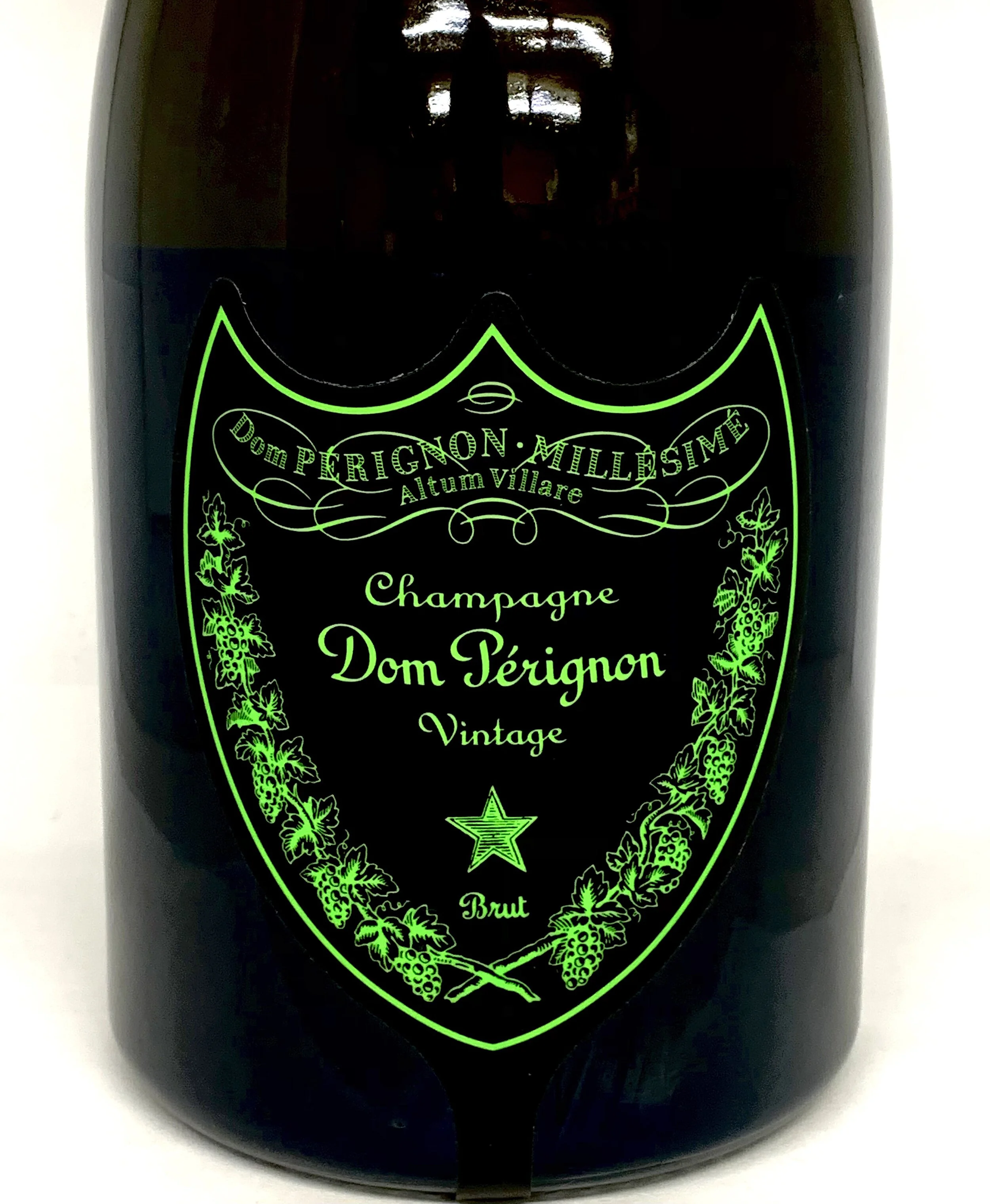
I drank a lot of fun things over the weekend, starting with a magnum of the 2008 Dom Perignon that my wife and I split on Christmas Eve (FYI—my wife and I can each kill a bottle of wine like most people do an evening cocktail).

We grabbed some caviar along with her new obsession—Taramosalata—that we spread on the blinis with the roe. I had never even heard of Taramosalata last week, but it’s a Greek caviar spread that’s made with fish, lemon juice, and canola oil, so it’s non-dairy. Both of us hate crème fraîche, so this was a fantastic new discovery for us, and one I’d highly recommend if you’re into caviar and Champagne. I’ll never go back.

We binged The Flight Attendant on HBO over the weekend and when you watch someone drink that much vodka, it’s hard not to join in. We walked down to the market for a second round of caviar yesterday, so this time I paired it with a U.S.S.R.-era Stoli bottle I’ve been keeping in my freezer for the last year. I can see why the Russians pair caviar with vodka. It really highlights the saltiness of the spread, especially if you’re using the smoked Taramosalata like we were.

For dinner last night, we did Thanksgiving sides without the meat: stuffing, mashed potatoes, roasted brussels sprouts, cranberry sauce, paired with the 2018 Hirsch Bohan-Dillon Pinot Noir. If you haven’t bought any of this wine yet, don’t wait too much longer. It’s the best Pinot Noir I’ve had in 2020, and it’s in the running for the best red wine I’ve had this year—period. It delivers every single time, especially with a meal like this. I didn’t even touch the cranberry sauce because I was getting all the same flavors out of the wine.

I dipped into the whiskey after dinner last night, finishing off the bottle of Baker’s 7 year Bourbon I had been weaning for the last month, then polishing that off with a fresh bottle of Lagavulin 9 year. Since I’ve got another 27 bottles stored away in the closet, I’m being quite liberal with those pours.

Back to work today for the final 2020 push. Gotta grab some more Champagne for myself. If you need a value option and you haven’t tried Paul Laurent yet, that’s your new house bottle. I’m buying another 6 bottles for myself today. And I’m considering a second magnum of the 2008 Dom. Because……I’m worth it.

-David Driscoll

Instagram Live Repost: Talking Tequila with El Tesoro's Luis Navarro

WARNING: Watching this conversation could ruin your love for your favorite Tequila for the rest of your life.

As a disclaimer, Mission Wine & Spirits can take no responsibility for minds being blown, carpets being pulled out from underneath you, or truths hurting in a way that pains your soul.

On the flip side, learning about traditionally-made Tequilas could make you an El Tesoro drinker moving forward, which isn’t a bad trade-off.

-David Driscoll

We Need To Talk About Tequila

ET + Mission 12.22.2020.png

Once again, I’m headed back on the @missionliquor gram at 4:30 PM today to sit down with my friend Luis at El Tesoro and discuss all of the fucked up ways that people are making Tequila right now.

The reason I can do this with Luis is because I know that Carlos Camarena and El Tesoro do things the right way; hence, I won’t be putting him on the spot.

But there are a lot of people making Tequila in ways that will chill your blood and curl your toes. We’re going to talk about that as well.

And if you can’t make it, I’ll have it archived here on the blog later this week. It’s not like any of us are busy in the days leading up to Christmas, right?

-David Driscoll

Celebrate The End Of A Cursed Year In Style

dom2008.jpg

If you’ve got $400 burning a hole in your pocket, I’ve got the ultimate way to celebrate the end of one of the worst years we’ve ever lived through:

I just bought one for myself this morning, which leaves roughly 40 bottles for the rest of you. As to why a $400 bottle of champagne would be worth your time, let me break it down for you.

  • 2008 is the best vintage of Dom Perignon I’ve ever tasted. Many of my colleagues from all over the industry agree. Not only is it one of the best vintages of Dom ever (so good that they released it out of order), it’s one of the best young drinking vintages, meaning you don’t have to wait to enjoy this. It’s in a beautiful spot.

  • Antonio Galloni from Vinous (where I tend to go when I need information or advice) reviewed the wine three times over three years:

    • Before its release, he wrote: “The 2008 Dom Pérignon is simply extraordinary. A wine of myriad dimensions, the 2008 explodes in all directions from the very first taste. Deep, powerful and yet wonderfully translucent, the 2008 boasts remarkable purity throughout. Crushed rocks, citrus, chalk and fresh spring water are some of the signatures. The 2008 is a stunning Champagne by any measure. It’s not too early to start setting aside the cash for this utterly magnificent, riveting Champagne.” He was basically prepping all of us to think about how much we could afford.

    • Upon its release, he wrote: “What I admire most about the 2008 is the way it shows all the focus, translucence and energy that is such a signature of the year, and yet it is also remarkably deep and vertical. In other words, the 2008 is a Champagne that plays in three dimensions.” Three dimensional wine, y’all!!

    • A year later, he wrote: “The 2008 Dom Pérignon is once again stunning. More than anything else, I am surprised by how well the 2008 drinks given all the tension and energy it holds. Then again, that is precisely what makes 2008 such a unique vintage – namely that the best wines are so chiseled and yet not at all austere. Lemon peel, almond, mint, smoke and crushed rocks are all finely sculpted, but it is the wine’s textural feel, drive and persistence that elevate it into the realm of the sublime. The 2008 will be even better with time in the cellar, but it is absolutely phenomenal even today, in the early going. Three recent bottles have all been nothing short of magnificent.”

  • So, yes, it’s basically one of the best Doms ever made, and ever released. On top of that, we’ve got it in MAGNUMS, which is the most coveted size for Champagne because the wine ages differently. In a magnum, the oxidation happens much more slowly, which means your wine ages more gradually if you want to put a couple of these in the cellar.

  • Retailers that have any of the 2008 Dom left in magnum are selling them for $500-$600 per bottle. Yet, our price is $399.

  • These 2008 magnums come adorned with the glow-in-the-dark luminous labels that light up with a switch underneath the punt. They were originally meant for nightclubs (because even in the dark, you want other people in the club to know you are rich!!!!!!).

  • Because nightclubs are closed, LVMH was sitting on this lot of 2008 treasure and we made them a deal for the rest of it. That’s how we got the price.

If you have ever wanted to treat yourself, or spend on a luxury bottle that 100% delivered the goods in every way possible (in three dimensions!), this is that moment.

I just threw down my hard-earned cash. Now I need to hit up Gelson’s for some caviar. I’m going to treat myself this holiday season because I have busted my ass the entire year and I am worth it.

Who’s with me?

-David Driscoll

Single Cask Vs. Blended

IMG_8410 2.jpg

I got a few emails this week about the single cask vs. standard edition post I wrote earlier this week. The main question: Macallan 25 is a blend? Yes, the official Macallan 25 is indeed a blend of many different Macallan 25+ year old barrels. It’s not a blended whisky because it’s made entirely of Macallan single malt, but it is a carefully crafted blend of Macallan single malt whiskies.

Here’s a visual analogy of how I think about single cask whiskies versus blends (or standard edition releases):

I took these photos from jeweler Jean-Noel Soni’s Instagram page (@topnotchfaceting) to show you what a precious stone looks like before and after it’s cut to perfection. I follow Jean-Noel because he’s friends with my other jeweler friends, and I have jeweler friends because my wife is into jewels. Which means, in order to be a good husband, I am also into jewels.

The photo above is an emerald—uncut (cask strength!).

The photo below is the stone after it’s been cut by Jean-Noel.

IMG_8414.jpg

Which version is more beautiful to you?

You might actually prefer the uncut stone. And, in fact, after seeing nothing but cut stones for your entire life on television and in magazines, you might be tired of hand-crafted perfection. It could be that the rugged, uncut nature of an emerald captures a new and exciting ideal of natural, rough-hewn beauty in your mind. It’s completely subjective.

Single cask whiskies can be mind-blowing; so good that you lament every drop you’ll never get back.

But, to me, they will never capture the light the way a perfectly-cut blend of different whiskies does. In turn, I gravitate towards cut, rather than uncut.

-David Driscoll

Instagram Live Repost: Talking Bourbon with Jim Beam’s Amanda Gunderson

This time we had the audio fixed, but for some reason a random dude with a leaf blower decided to clean the alley behind my house and next to my front window right as Amanda and I were getting started.

As a result, I had to edit out the first few minutes due to noise and skip the introduction of Old Tub Bourbon. What you missed:

  • I said Old Tub Bourbon is awesome.

  • Amanda agreed.

  • We talked about the differences in the various Beam 100 proof bottled-in-bond whiskies, and how Beam uses two recipes and fills at different proofs to differentiate them.

Continue from there!

-David Driscoll