Celebrate The End Of A Cursed Year In Style

dom2008.jpg

If you’ve got $400 burning a hole in your pocket, I’ve got the ultimate way to celebrate the end of one of the worst years we’ve ever lived through:

I just bought one for myself this morning, which leaves roughly 40 bottles for the rest of you. As to why a $400 bottle of champagne would be worth your time, let me break it down for you.

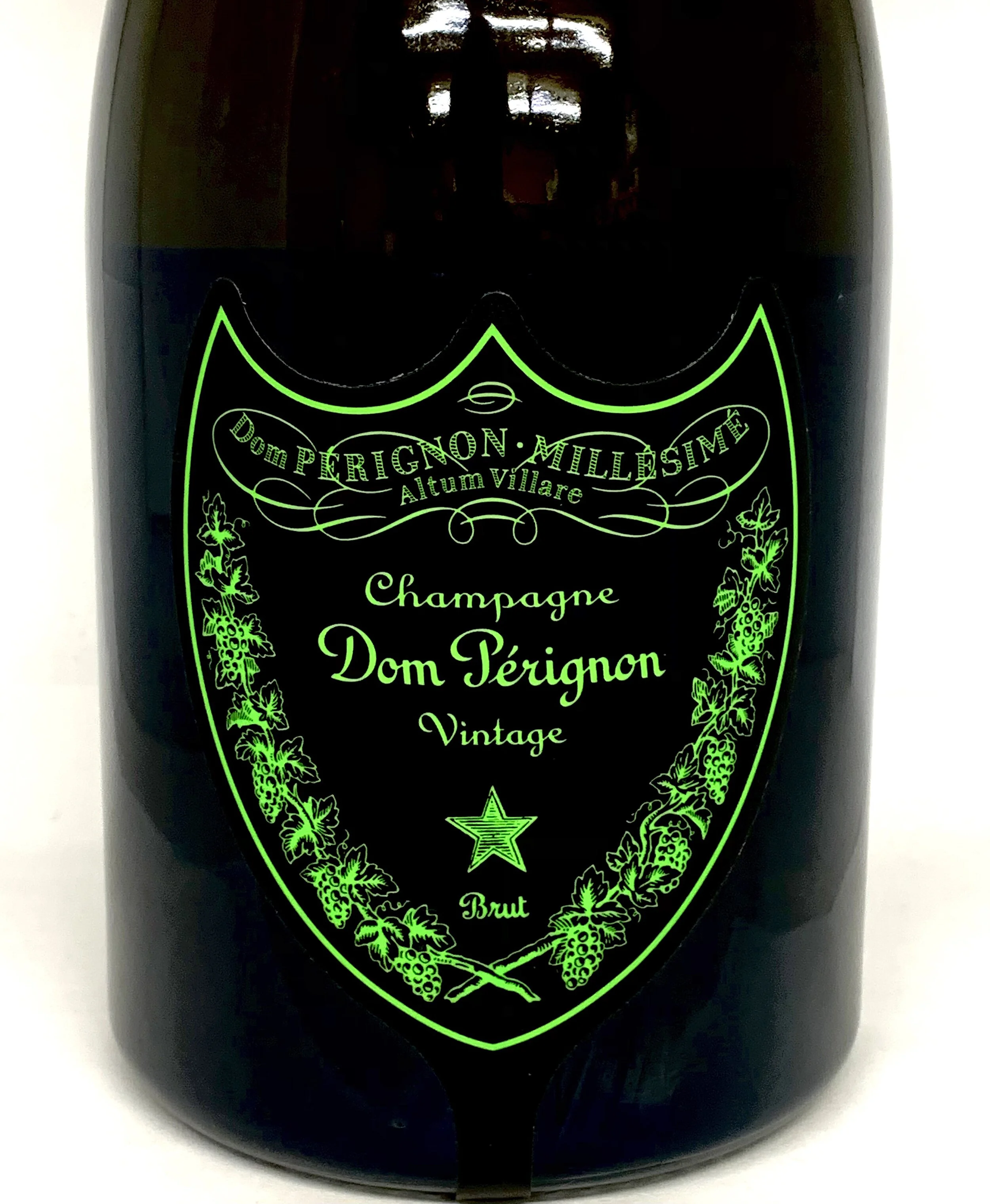
  • 2008 is the best vintage of Dom Perignon I’ve ever tasted. Many of my colleagues from all over the industry agree. Not only is it one of the best vintages of Dom ever (so good that they released it out of order), it’s one of the best young drinking vintages, meaning you don’t have to wait to enjoy this. It’s in a beautiful spot.

  • Antonio Galloni from Vinous (where I tend to go when I need information or advice) reviewed the wine three times over three years:

    • Before its release, he wrote: “The 2008 Dom Pérignon is simply extraordinary. A wine of myriad dimensions, the 2008 explodes in all directions from the very first taste. Deep, powerful and yet wonderfully translucent, the 2008 boasts remarkable purity throughout. Crushed rocks, citrus, chalk and fresh spring water are some of the signatures. The 2008 is a stunning Champagne by any measure. It’s not too early to start setting aside the cash for this utterly magnificent, riveting Champagne.” He was basically prepping all of us to think about how much we could afford.

    • Upon its release, he wrote: “What I admire most about the 2008 is the way it shows all the focus, translucence and energy that is such a signature of the year, and yet it is also remarkably deep and vertical. In other words, the 2008 is a Champagne that plays in three dimensions.” Three dimensional wine, y’all!!

    • A year later, he wrote: “The 2008 Dom Pérignon is once again stunning. More than anything else, I am surprised by how well the 2008 drinks given all the tension and energy it holds. Then again, that is precisely what makes 2008 such a unique vintage – namely that the best wines are so chiseled and yet not at all austere. Lemon peel, almond, mint, smoke and crushed rocks are all finely sculpted, but it is the wine’s textural feel, drive and persistence that elevate it into the realm of the sublime. The 2008 will be even better with time in the cellar, but it is absolutely phenomenal even today, in the early going. Three recent bottles have all been nothing short of magnificent.”

  • So, yes, it’s basically one of the best Doms ever made, and ever released. On top of that, we’ve got it in MAGNUMS, which is the most coveted size for Champagne because the wine ages differently. In a magnum, the oxidation happens much more slowly, which means your wine ages more gradually if you want to put a couple of these in the cellar.

  • Retailers that have any of the 2008 Dom left in magnum are selling them for $500-$600 per bottle. Yet, our price is $399.

  • These 2008 magnums come adorned with the glow-in-the-dark luminous labels that light up with a switch underneath the punt. They were originally meant for nightclubs (because even in the dark, you want other people in the club to know you are rich!!!!!!).

  • Because nightclubs are closed, LVMH was sitting on this lot of 2008 treasure and we made them a deal for the rest of it. That’s how we got the price.

If you have ever wanted to treat yourself, or spend on a luxury bottle that 100% delivered the goods in every way possible (in three dimensions!), this is that moment.

I just threw down my hard-earned cash. Now I need to hit up Gelson’s for some caviar. I’m going to treat myself this holiday season because I have busted my ass the entire year and I am worth it.

Who’s with me?

-David Driscoll

Single Cask Vs. Blended

IMG_8410 2.jpg

I got a few emails this week about the single cask vs. standard edition post I wrote earlier this week. The main question: Macallan 25 is a blend? Yes, the official Macallan 25 is indeed a blend of many different Macallan 25+ year old barrels. It’s not a blended whisky because it’s made entirely of Macallan single malt, but it is a carefully crafted blend of Macallan single malt whiskies.

Here’s a visual analogy of how I think about single cask whiskies versus blends (or standard edition releases):

I took these photos from jeweler Jean-Noel Soni’s Instagram page (@topnotchfaceting) to show you what a precious stone looks like before and after it’s cut to perfection. I follow Jean-Noel because he’s friends with my other jeweler friends, and I have jeweler friends because my wife is into jewels. Which means, in order to be a good husband, I am also into jewels.

The photo above is an emerald—uncut (cask strength!).

The photo below is the stone after it’s been cut by Jean-Noel.

IMG_8414.jpg

Which version is more beautiful to you?

You might actually prefer the uncut stone. And, in fact, after seeing nothing but cut stones for your entire life on television and in magazines, you might be tired of hand-crafted perfection. It could be that the rugged, uncut nature of an emerald captures a new and exciting ideal of natural, rough-hewn beauty in your mind. It’s completely subjective.

Single cask whiskies can be mind-blowing; so good that you lament every drop you’ll never get back.

But, to me, they will never capture the light the way a perfectly-cut blend of different whiskies does. In turn, I gravitate towards cut, rather than uncut.

-David Driscoll

Instagram Live Repost: Talking Bourbon with Jim Beam’s Amanda Gunderson

This time we had the audio fixed, but for some reason a random dude with a leaf blower decided to clean the alley behind my house and next to my front window right as Amanda and I were getting started.

As a result, I had to edit out the first few minutes due to noise and skip the introduction of Old Tub Bourbon. What you missed:

  • I said Old Tub Bourbon is awesome.

  • Amanda agreed.

  • We talked about the differences in the various Beam 100 proof bottled-in-bond whiskies, and how Beam uses two recipes and fills at different proofs to differentiate them.

Continue from there!

-David Driscoll

Instagram Live Repost: Talking Wheated Bourbon with Phil Olson from Maker's Mark

For those of you who couldn’t tune in live last night for our Instagram conversation, I’ve embedded the recording here on the blog. This is the first time I’ve tried to do this, so there’s a difference in my audio versus Phil’s. My apologies.

I will tweak the audio for this evening’s second conversation with Amanda Gunderson from Beam, and I’ll try to post that on the blog tomorrow.

I need some practice, but this was a decent first go. Thanks again to Phil and Maker’s Mark for sitting down and having the conversation.

-David Driscoll

The Exception or the Rule?

Lots of people asking me when we’re going to start a single barrel Scotch program here at Mission, in line with the program I helped create at my previous employer.

The answer: as soon as we’re ready. Single barrel selections are what I built my reputation on, so it’s a given that I’ll want to dip into that well again ASAP.

That being said, here’s the issue with single barrels that I want more people to understand: when they become the rule rather than the exception, you lose the context within which they gain their value and their meaning.

To give you an example: HBO is an amazing network and it dominates much of my screen time these days. I loved The Undoing. I also very much enjoyed Murder on Middle Beach. Now I’m on to How To With John Wilson. There’s so much good programming to watch just on HBO.

But what happens when I go to a party and everyone’s talking about The Queen’s Gambit on Netflix? I have no context if all I watch is HBO. Hence, I can’t be a part of the conversation and offer an opinion.

Context is everything in the world of wine and whiskey appreciation. If you don’t know what else is out there, then you can’t say for certain whether something is or isn’t worth the money.

It’s the same reason people say traveling is so important for young people; when you have context for the world as a whole, you can better appreciate your situation or what you want out of life.

Single barrels are a fun contrast to the standard marketplace, but what they offer in value and uniqueness they often lack in complexity and nuance. For me, they’re more like educational curiosities and opportunities for exploration than they are polished products.

But there’s more to it than that.

First off, single barrel whiskies are rarely better than standard editions. When I go to Scotland, maybe 10-15% of the barrels I taste are worth looking into. Then it’s about price from that point on.

Second, single barrel whiskies only gain a uniqueness if you have the context from the standard edition.

To give you another example, if you’ve never had the standard Balvenie whiskies, how can you understand if a single barrel edition of Balvenie offers value, or maybe a new and interesting flavor that you can’t get from the standard editions?

This goes back to my initial blog post and how many modern consumers value specs over flavor. People see that Macallan 25 costs $2000, so they get excited about buying a 25 year old single cask for $400.

But they’re not the same thing. They’re not even close.

A single barrel of 25 year old Macallan is a fun experience, but it’s not like you’re getting a $1600 discount on the same whisky.

As an aside, I tasted an older single barrel of Balvenie last week with my buddy David from William Grant. We both agreed it was delicious. But then I tasted the official Balvenie 30 year old edition and wanted to cry because it was so damn incredible. If you’ve never had Balvenie 30 year, it’s one of the best whiskies that money can buy at any price.

In my mind, I’d rather splurge on the 30 than settle for the single barrel. But I have that context, so I can say one way or the other.

The point is: you need to try everything.

-David Driscoll

Two Instagram Live Conversations

MM Mission Insta Live 12.14.2020.png

You can’t operate in the digital marketing world today without getting on the old Instagram for some live content.

However, much like with politics, there are few things I find less stimulating than watching booze industry people repeat talking points and tow the company line when people want real answers to real questions, so we won’t be doing that.

I told Beam last week we should discuss two subjects people would actually be interested in knowing more about:

  1. Wheated Bourbon as a category, rather than just Maker’s Mark.

  2. What has changed at Beam over the last few years that has led to a rather remarkable improvement in the quality of their small batch editions?

We’re gonna try and go back-to-back this week, starting tomorrow at 4:30 when I sit down with Phil Olson to talk about wheated Bourbon. Why do people like it so much? What does wheat do to the flavor of Bourbon? Do people actually like it as much as they say they do, or is saying you like wheated Bourbon just a way for insecure guys to look less like Pappy/Weller fanboys?

This all happens tomorrow on Instagram by following @missionliquor and logging in at 4:30 PM PST.

Conversation two is scheduled for Wednesday at the same time, but I’ll confirm tomorrow.

I hope you’ll join us! I’ll do my best to make it fun.

-David Driscoll

Home Bar Report - 12/12/20

hirschbohan.jpg

Yesterday, my friend Crystal and I were discussing when and when not to talk about your own personal taste while selling wine. As anyone who works in sales knows: wine retail isn’t about selling what you like personally.

Actually, lemme rephrase that.

Anyone who works in sales should know that wine retail isn’t about extolling your own personal taste.

Your job is to help the customer find a wine that fits their personal taste. Period. End of story (yet, how often I see people forget).

That being said, sometimes people do ask what you’re drinking at home. If a customer is interested enough to ask, I’m happy to share with them my own personal purchases. And since some of you have asked me via email, I’m going to share this week’s selections here and now. I bought three things this week for the home bar.

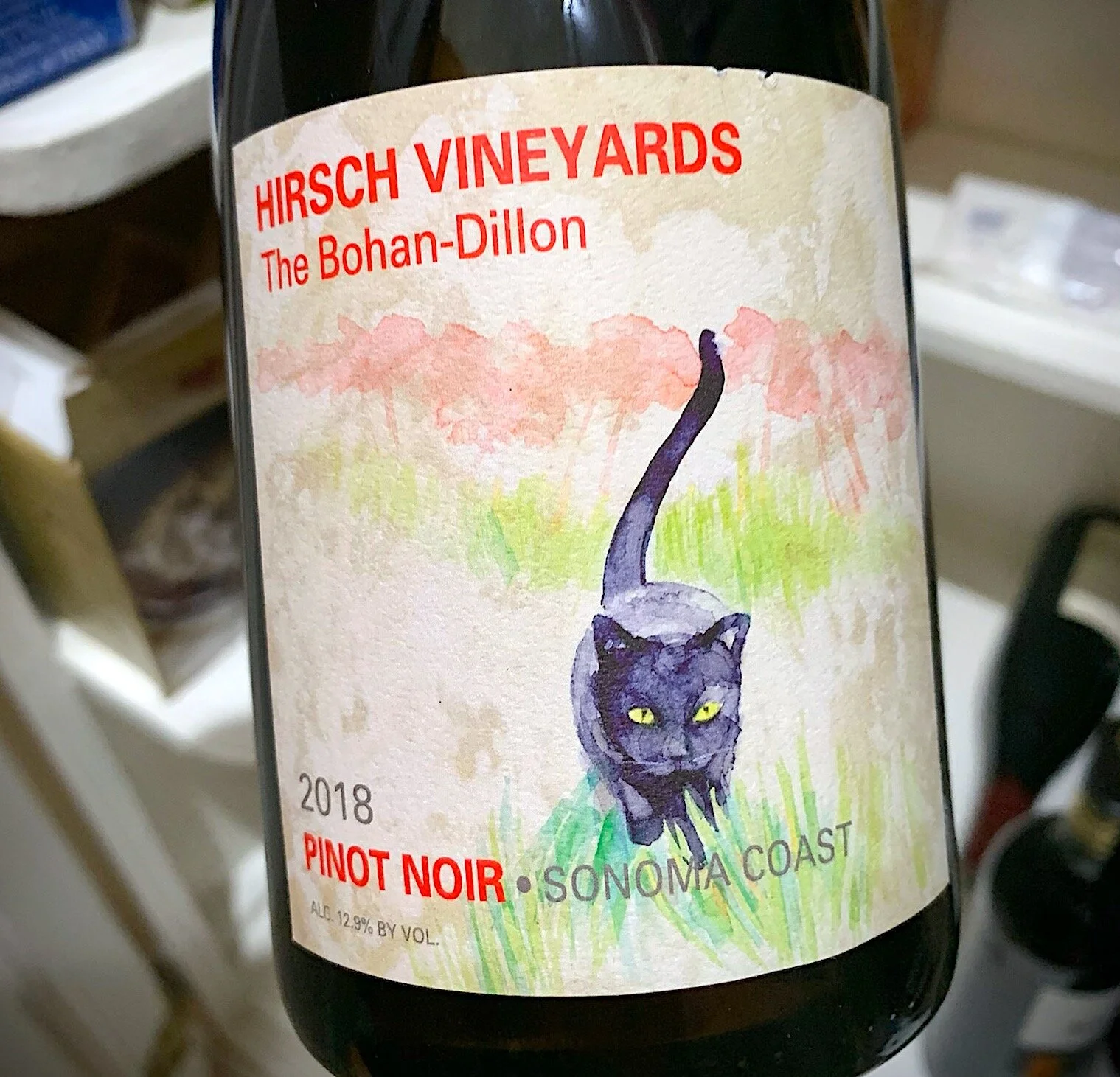
First off, the 2018 Hirsch Bohan-Dillon Sonoma Coast Pinot Noir for $39.99.

I didn’t just buy one or two bottles of this, I bought a CASE. Because pound for pound, dollar for dollar, there is no California pinot noir in the store as good as this. In fact, there’s no pinot noir in the store from anywhere as good as this.

I’m a big Burgundy fan and I love cold climate pinot noir in general. But the problem with Burgundy right now is two-fold:

  1. The wine tariffs have added 25% or more to the retail prices.

  2. The recent vintages aren’t all that approachable in their youth.

Because I’m neither a Côte d’Or citizen, nor a wealthy entrepreneur, I don’t have a Burgundy cellar full of perfectly aged Bourgogne Rouge to pull from. I go from bottle to bottle, but lately I’ve been somewhat disappointed with the options. The 2018 Hirsch Bohan-Dillon, on the other hand, is far from a disappointment. It’s for Burgundy drinkers in search of something approachable now, or for California drinkers who enjoy acidity and brightness in their reds. This wine is simply electric on the palate; loaded with cranberry, tart cherry, and spice. I can’t get over how good it is and I’ll never get tired of drinking it.

huards.jpg

While the Hirsch is indeed an incredible wine, it’s also $40 a bottle. And while I’m always willing to spend to drink well, I don’t have the funds to crush $40 bottles every night. I need something closer to $20 for Tuesday night takeout. That’s where the 2018 Huards Envol Cheverny Rouge comes in: a 50/50 blend of pinot noir and gamay from the Loire Valley that again gives me everything I want from Burgundy, for a price that I can afford; it just happens to not be from Burgundy.

I know many drinkers who love pinot noir and Burgundy, but for some reason shy away from gamay and its juicier flavor profile. Personally, I love Beaujolais, but I wouldn’t use that as a comparison for the Huards. It’s bright and it has lift, maybe even a bit of carbonic action, but it isn’t Beaujolais in its profile. It’s got too much of that classic cherry flavor that you get in something like Marsannay or even Sancerre Rouge. It’s pure red fruit on the palate, never too earthy or acidic, and it has real body to it. I also bought a case of this because the importer is sold out until February.

Screen Shot 2020-12-12 at 8.01.13 AM.png

On the spirits side, I’ve got so many open bottles right now that my only real purchase this week was for the Nachtmann Punk decanter sets that we have at roughly $100 off the standard retail price. For $59.99 you get one decanter and two glasses, each adorned with Riedel-quality rivets, giving it that studded punk rock edge. These are currently $150 on the Riedel website, so I bought four of them. Two to use now (as pictured above) and two in reserve for when I eventually break the two I have currently in use.

Now I just really wanna stay home and watch The Crown.

-David Driscoll

The Customer Is Half Full

Optimism versus pessimism.

Is the glass half full, or is it half empty?

We all know the age old question about personality types and how different people see the world, but did you know that the same question applies to business?

It’s not necessarily something you’re thinking about as a consumer, but it’s definitely what businesses are thinking about you. I spent almost eleven years working retail in the same store, so I only really ever understood one approach: the customer is half full, meaning most people are generally good natured and will return if you treat them well.

That being said, after spending two years on the other side of this business, handling distribution to retailers across California, I can tell you with certainty: there are more retailers who see things the other way. They think the customer is half empty, meaning most people are generally out to screw you, so you need to defend yourself at all times.

It’s a fascinating subject for me because, even though I’ve been on the receiving end of countless negative customer service experiences, I still believe that giving people the benefit of the doubt is the way to go.

Yes, sometimes I lose out in the transaction.

Yes, sometimes people take advantage of my generosity.

Yes, I understand that people think I’m a sucker.

But the amount of business I’ve been able to generate over the years from taking care of people has always outweighed those losses—by a ratio of 100000000 to 1.

I’m willing to take those odds 100% of the time. And I’m willing to take the beating now and again to continue that style of business. To me, the best defense is a good offense.

But not everyone is built for that style of service or that level of commitment. Most people I’ve met who work in retail just want to get through the day, cross their duties off the list, and go home so they can watch TV. To them, taking the time to answer 200 emails about why you cannot get a bottle of Pappy is a gigantic waste of time. They could be using that time to do any number of more profitable activities.

You can absolutely make the argument that personalized customer service doesn’t scale economically. There is plenty of evidence that shows retailers can be just as profitable by selling fewer bottles at higher margins, rather than more bottles at lower margins. At the same time, retailers who show little to no interest in their customers can counteract that lack of service with access to bulk pricing and special offers.

I have my way of doing things, and it’s worked for me my entire career, but I don’t have any metrics that can prove whether my time could have been better spent doing other things, or whether a shrewder sense of business would have benefited me in the long run. Maybe the guy who I sold the bottle of Blanton’s to didn’t really have a dying father whose final wish was to drink Blanton’s with his son. Maybe the guy who said his bottle of Lagavulin broke in the mail was lying and he suckered me out of a free bottle. Who knows.

The point is: I don’t really care.

I’m too busy thinking about all of the other people that I could be helping. I see retail as half full: there’s always something else I can be doing to make customers happy. Just like I don’t dwell on whether I could have saved 15% by switching to Geico, or whether I got the cheapest price on premium unleaded, I don’t think about how much money I could have made if I had done things differently.

But I have that luxury. I’m an optimist. I’m just lucky, I guess.

-David Driscoll