An Insider's Guide to Johnnie Walker

walkers.jpg

Here’s the thing about blended whisky that super whisky geeks generally don’t like: you don’t know what’s in it.

Sure it tastes good. It might even taste incredible. But when education is involved and the opportunity for added intellectual knowledge is blurred or removed, some people opt out.

These folks want percentages, distillery names, cask numbers, proofs, and specifics. Knowing is part of the fun. They want to know why something tastes the way it does. I get it. I’m often that way, too.

Today, I’m going to try and bridge the gap. I have friends at Diageo from my time in the business, so sometimes I get access to information that not everyone has. With that information, I’ve decided to go back, taste through the core of Diageo’s Johnnie Walker expressions, and offer single malt lovers an inside look at the components that make-up these renowned labels.

Because at the end of the day, Johnnie Walker makes some pretty damn good whisky. A little more information might be what’s needed to bring more finicky drinkers into the fold.

Ready to walk through these with me? (pun intended)

Johnnie Walker Red Label

  • Core single malt whiskies: Teanninich, Cardhu, and Caol Ila

  • Core grain whiskies: Cameron Bridge

    • Teanninich is distillery in the Northern Highlands that dates back to 1817 and does a 75 hour ferment for an ultra-fruity style of malt.

    • Cardhu was built in 1824, is located in the Speyside region, and also does a 75 hour ferment.

    • Caol Ila is an Islay distillery founded in 1846 that makes a smoky, but creamy and oily malt with its huge pot stills.

    • Cameron Bridge is a grain distillery outside of Edinburgh dating back to 1824 that is said to be the oldest continually-operating distillery in the world. It makes grain whisky as well as the neutral grain spirits for Smirnoff and Tanqueray gin.

  • Flavor Profile: Fruity, seductively sweet, and slightly smoky

  • David’s Notes: Having not tasted the Red Label in years, I have to say that I’m completely smitten with this whisky because I understand the task that’s been accomplished here. The palate is ridiculously integrated and seamless for a blend of this size and scale, which is no small feat. Remember: blending old, expensive whiskies is easy because most of the time they already taste really good on their own! Blended young grains and less mature malts is much harder because the edges are rougher and more difficult to streamline. The fact that we sell 1.75 liters of this for $33 is insane.

Johnnie Walker Black Label 12 Year Old

  • Core single malt whiskies: Blair Athol, Cardhu, Strathmill, and Caol Ila

  • Core grain whiskies: Cameron Bridge

    • Blair Athol is one of the most beautiful distilleries in Scotland, located in the quaint village of Pitlochry in the lower Highlands. Known mostly as the key malt in Bell’s Blended Whisky, it dates back to 1798 and makes a soft, fruity whisky.

    • Cardhu - See my notes from the Red Label

    • Strathmill was founded in 1891 and creates a light and fruity style of malt. Using a purifier at the top of its stills, the device forces the heavier alcohols back down, allowing only the lighter alcohols to move through to the condenser.

    • Caol Ila - See my notes from the Red Label

    • Cameron Bridge - See my notes from the Red Label

  • Flavor Profile: More pronounced smoke, soft and ashy on the palate, rich and smooth through the finish.

  • David’s Notes: The Black Label 12 year is perhaps the archetype for what Scotch is “supposed” to taste like. It runs the gamut of whisky flavor effortlessly from peaty to malty, and vanilla to Sherry, without any rough edges.

Johnnie Walker Double Black

  • Core single malt whiskies: Cardhu and Caol Ila

  • Core grain whiskies: Cameron Bridge

    • Cardhu - See my notes from the Red Label

    • Caol Ila - See my notes from the Red Label

    • Cameron Bridge - See my notes from the Red Label

  • Flavor Profile: Smoky and peaty on the nose, more of that on the palate, rich and luscious on the finish.

  • David’s Notes: Basically take out two of the Highland single malts from the Walker Black, double up on the Caol Ila, and you’ve got the Double Black. If you like peaty whisky, this is the peatiest of the core JW range.

Johnnie Walker Gold Label Reserve

  • Core single malt whiskies: Clynelish, Cardhu, Blair Athol and Caol Ila

  • Core grain whiskies: Cameron Bridge

    • Clynelish is one of the most distinctive single malts in all of Scotland, renowned by aficionados for its waxy, lemony flavor and delicate nature. Built in 1967 to replace the aging Brora distillery, it’s one of the furthest North in Scotland.

    • Blair Athol - See my notes from the Black Label

    • Cardhu - See my notes from the Red Label

    • Caol Ila - See my notes from the Red Label

    • Cameron Bridge - See my notes from the Red Label

  • Flavor Profile: Waxy up front with honey and heather across the middle, stone fruit and vanilla on the finish.

  • David’s Notes: I always tell people: if there’s one whisky you can always pick out of a blind tasting, it’s Clynelish because no other whisky tastes like this. The Gold Reserve, while not as mature as the now-defunct Gold 18 year, is a fantastic whisky from front to back and it’s incredibly complex. There are layers of flavor to unpack here, oily, chewy, round, and supple textures as well that pour over your tongue with every sip.

Johnnie Walker Green Label 15 Year Old Blended Malt

  • Core single malt whiskies: Linkwood, Talisker, Cragganmore, and Caol Ila

  • Core grain whiskies: none

    • Linkwood dates back to 1821 and produces a floral and sometimes heathery whisky that is light and easy to drink.

    • Talisker was founded in 1830 and is located on the remote Isle of Skye. Its combination of peat and candied fruit flavors have made its single malt a fan favorite for decades.

    • Cragganmore was built in 1869 and distills a more robust style of malt due to the shape of its stills, making it the perfect foil for Sherry cask maturation.

    • Caol Ila - see my notes from the Red Label

  • Flavor Profile: Creamy and slightly sweet with gentle smoke flavors and nutty Sherry notes on the finish.

  • David’s Notes: Always the best of the bunch for me, you get the super creamy notes from the Cragganmore and the Linkwood, with the peaty, smoky notes from the Talisker and the Caol Ila. It’s fat and supple on the palate, and chewy on the backend, which I love. It’s also nice to see how well this whisky has kept its form since reverting back to the four malt formula. I plan on having a bottle of this in my home at all times moving forward.

Johnnie Walker 18 Year Old

  • Core single malt whiskies: Cardhu, Glen Elgin, Auchroisk, Blair Athol, and Caol Ila

  • Core grain whiskies: Cameron Bridge

    • Cardhu - See my notes from the Red Label

    • Glen Elgin dates back to 1898 and is another of Diageo’s Highland distilleries known for a heavy and robust whisky, which is often matured in Sherry butts.

    • Auchroisk (often pronounced ah-thrusk) is a newer facility, founded in 1974, that is known for its grainy, malty, sometimes even nutty profile.

    • Blair Athol - See my notes from the Black Label

    • Caol Ila - See my notes from the Red Label

    • Cameron Bridge - See my notes from the Red Label

  • Flavor Profile: Delicate and refined with soft fruit, layered Sherry notes, and just the softest touch of smoke.

  • David’s Notes: This a haunting whisky, almost like drinking the soul of Scotch whisky. You wanna talk about seamless and smooth? There’s no whisky in the JW lineup as seamless and smooth as this. Every flavor builds into the next one, to the point that it’s hard to pick out any one thing. It’s a masterpiece of whisky architecture. The Sherry-matured additions of Glen Elgin and Auchroisk steal the show here.

Johnnie Walker Blue Label

  • Core single malt whiskies: Benrinnes, Cardhu, Clynelish, and Caol Ila

  • Core grain whiskies: Cameron Bridge and Port Dundas

    • Benrinnes was founded in 1826, but the distillery was rebuilt in the 1950s. The whisky undergoes a rapid distillation process which results in a heavier spirit, then is condensed in worm tubs for an even more robust character.

    • Cardhu - See my notes from the Red Label

    • Clynelish - See my notes from the Gold Label Reserve

    • Caol Ila - See my notes from the Red Label

    • Cameron Bridge - See my notes from the Red Label

    • Port Dundas - Operating from 1811 to roughly 2009, Port Dundas was the Glaswegian counterpart to Cameron Bridge, producing column still grain whiskies only. Now that it’s closed, every sip means there’s a little less Port Dundas whisky in the world.

  • Flavor Profile: Incredibly soft and lithe with stewed fruits and an oily, softly sweet finish.

  • David’s Notes: One of the most ethereal whiskies in the world, so dainty and reserved that it’s almost like listening to beautiful melody at a low volume. Most people have the instinct to turn things up and rock out when they love music, but the Blue Label doesn’t work that way. You have to tune out the world and focus in completely on its haunting beauty in order to fully appreciate it. Dialing it up only distorts its character. For those who taste carefully, you’ll be blown away by how many currents are running at an incredibly low frequency. Benrinnes is also one of my favorite Highland distilleries because the whisky has a thickness to it that you can almost sink your teeth into, which you can sense in the mid-palate. Combine that with the Clynelish, and you get something other-worldly.

Johnnie Walker 200th Anniversary Celebratory Blend

  • Core single malt whiskies: Cardhu, and ?????

  • Core grain whiskies: Port Dundas

    • Cardhu - See my notes from the Red Label

    • Port Dundas - See my notes from the Blue Label

  • Flavor Profile: Rich and simultaneously powerful due to the higher proof, with candied fruit and peppery spice on the finish.

  • David’s Notes: Thick with sweet malt flavors on the nose—honey, toffee, malted barley—with more heft in the mid-palate from the 51% ABV. The middle is all dried fruits and raisins, before bursting on the finish with creme brûlée notes. It’s sort of a one-trick pony from front to back, but it’s a really good one simply due to the oily texture which I absolutely adore in my whiskies.

-David Driscoll

Confirmation Bias

If you haven’t been following the Whisky Advocate’s Top 20 Countdown to the best whiskies of the year, they’re generally releasing three a day until the final unveiling of #1.

While numbers four through ten are fine choices, it’s the second and third picks from today that have me nodding my head in complete agreement.

  • #2 - Knob Creek 12 Year Old - I’ve been trying to tell as many people as I possibly can: BEAM IS BACK (and i’ll have more of the Knob 12 year tomorrow for you email list members).

  • #3 - Benriach The Smoky 12 Year - I caught up with Rachel Barrie and team this week to talk Benriach and I was mightily impressed by this whisky. That being said, I was probably even more impressed by the Smoky 10 year. The peat was sweeter and the whisky just tasted better to me.

Can’t wait to see what #1 is!

So far, I’m in complete agreement from what I’ve tasted.

-David Driscoll

The Great Wheated Dilemma

larbar.jpg

There’s a joke in the retail industry about wheated Bourbons. Everyone who works in a liquor store understands it. It goes something like this:

  • A customer asks if you have any good wheated Bourbons.

  • You show them Maker’s Mark, Larceny, the Willett Pot Still, maybe even something new like Wilderness Trail, but they’re never interested and invariably say, “Do you have anything else?”

We all laugh. Then we sigh.

The joke (if you didn’t catch it) is that the customer isn’t really looking for wheated Bourbon recommendations. The customer is asking if you have any Pappy, or if you have any Weller, and is trying to be coy about asking directly.

It’s the great dilemma with Pappy and Weller. If you have to ask, you probably can’t get it. But you also won’t get it if you don’t ask.

What’s a loyal Bourbon customer to do? There’s no easy answer. I’m still working on a better solution, and while I’m fairly good at what I do, I haven’t invented a way of turning 50 rare bottles of Bourbon into 5,000 bottles.

When I worked at K&L, I had my own solution for rationing out these whiskies, but it wasn’t perfect and it put me at odds with a large number of consumers. In the case of Weller, I would put them on the web, limit them to one bottle per customer, email my insider list that the bottles were available, and let the technology take care of the rest.

If you live on your phone, you’re probably fine with that solution. But then I would receive hundreds of emails from irate customers who work during the day and weren’t by their computers when the notice went out. How was I planning to take care of them?

In the case of Pappy or the Buffalo Trace Antique Collection bottles, I would raffle them off using an internal email system.

Everyone who won a bottle was delighted. Everyone who lost was pissed. It often would take me weeks to dig out from all the angry correspondence.

“Do you know how long I’ve shopped here? How much money I’ve spent in your store?”

I could write a fifty page dissertation about all of the bullshit you have to deal with as a retailer when selling these rare whiskies, but I’ll save you the sob story. The point is this: no matter how you deal with the situation, you’re going to piss people off. A lot of them. Consistently. Without end.

That’s why many retailers mark the whiskies up, throw ‘em on the web, and forget about them. It’s pure capitalism. They don’t have the time or the patience for the delicate dance that luxury goods management requires. If everyone’s going to be pissed no matter what, we might as well make some money, right?

That strategy is wrought with its own complications, which is why I’m planning to instill some of my customer service protocols at Mission moving forward. But in the midst of holiday madness there are more important battles on my agenda; like finding wheated Bourbon solutions that work for more than just 25 customers.

Hence, why I’m excited about this new barrel of Larceny we have in stock. It may not be exciting for wheated Bourbon fans who really only like two very specific wheated Bourbon labels, but if you legitimately enjoy the sweetly-spiced profile of a true wheated Bourbon recipe and you’re looking for something new to try, this bottle is for you.

Larceny---Mission-Barrel-Select_600x.png
  • WHY: This wheated single barrel Larceny Bourbon barrel was hand-picked by our buying team to match the flavor profile we know our customers crave: sweet notes of clove and nutmeg, creamy oak richness, soft vanilla, with pencil shavings and barrel char notes on the finish.

  • HOW: Originally barreled on 03/13/13 (lucky numbers!), Barrel No. 6357516 comes from the 6th floor of Heaven Hill's W Warehouse in Bardstown, giving it extra concentration from the elevated position due to the hot summer days. Larceny uses a mash bill of 68% corn, 20% wheat, and 12% barley.

  • WHAT: Larceny is Heaven Hill Distillery's label for its wheated Bourbon recipe, substituting wheat for rye as the secondary flavor grain in the mash hill.

I’ve been playing around with the bottle all weekend and it works well in so many different ways. It’s delicious as a straight pour, it holds up with ice, and it mixes very well with sweet vermouth, integrating itself beautifully into a Manhattan.

We’ve got a whole barrel of the Larceny at $21.95 a bottle, and the concentration of flavor from that single barrel is what makes the difference here. If you come into Mission and ask us about wheated Bourbons right now, this is what we’ll be putting in your hand.

-David Driscoll

Blending At Home

IMG_8193.jpg

Are you able to tell if your food needs salt?

When you eat a pastry or a cookie, can you tell if it needs sugar or perhaps has too much?

If the answer to either of the above questions is yes, then you can blend whisky.

More importantly, you should blend whisky. At home. In your free time.

I told myself I was going to take weekends off when I started writing this blog, but I wanted to share something with you this morning (after texting with whisky friends all night) because it’s not a subject I talk about very often, but should.

I’ll share a secret with you: the three best whiskies in my home bar are not super rare editions that I bought at a store or brought back in a suitcase from abroad. The three best whiskies in my bar are whiskies that I blended for my own personal palate. I took other whiskies that I had purchased, combined them into specific quantities, and married them together to make three whiskies greater than the sum of their parts.

And when I say they’re the best, it’s not even close. The rye whiskey blend in particular is better than any singular rye I can buy on the market right now.

I’m telling you: you can make almost any whisky taste better by adding other whiskies to it. However, it only works if you know what you want. I know exactly what I like, and when I get a bottle that doesn’t deliver what I want, I combine it with another bottle to make it into something I do want.

Not sweet enough? Add a sweeter whisky. Too boring? Add something peaty.

All the time, I hear people say things like this about disappointing bottles: “I’ll just use it for cocktails.” That’s fine.

But if you’re willing to blend it with vermouth or sugar, why not also consider blending it with other whiskies?

That was a rhetorical question, really, because I know the answer. Many drinkers are petrified of “messing up” their booze—serving it in the wrong glass, adding ice or water when they shouldn’t, using the wrong ingredients in a cocktail, etc.

But if you can get over that fear, or the purist’s idea that each whisky in your glass should be unadulterated—that the master blender’s original intent be undisturbed!—then you can really make some magic happen.

I will also say this: I am not a master blender, but I have dabbled throughout my career. I have blended roughly a dozen different projects that have gone into bottle, and depending on who you ask (and who will actually admit it), I may have helped introduce a new blended Hennessy edition to the market back in the day. That being said, I’m not professionally trained. I didn’t read a book. I just started playing around with my booze one day, and found that I enjoyed it.

The point is that you can also blend at home. You don’t need raw materials like cask strength samples or individual barrels. You just need different kinds of whisky.

If you’re still feeling squeamish about ruining your fancy single malts, or your high-end Bourbons, I’ll give you an exercise that hopefully won’t give you a panic attack.

The Diageo Whisky Negroni

There’s a reason the Negroni has become the world’s favorite cocktail over the last decade. Not because it tastes good (which it does), but because anyone can make it. It’s literally foolproof. You cannot mess it up.

It’s just equal parts gin, Campari, and sweet vermouth. You can do 1 oz. + 1 oz. + 1 oz. Or you can increase the portions if you want a larger cocktail.

To that end, I did the same thing last night with my Game of Thrones closeouts from the store. If you’re living under a rock, we’ve got Lagavulin 9 year for $24.99, and the Johnnie Walker editions for $15 each right now. I used the Song of Fire and the White Walker edition because I wanted something with a little smoke and something rather neutral.

IMPORTANT: The White Walker edition on its own is exactly the type of whisky I was mentioning earlier. Rather tame and forgettable on its own, but absolutely perfect as a foundation for your blending. If you feel like tinkering around with whisky blending, I can’t recommend a better starting point, especially for the price right now.

After tinkering around with a few different ideas, I decided to go with a foolproof Negroni ratio on this blend:

1 oz. Lagavulin 9 year + 1 oz. Song of Fire + 1 oz. White Walker. Stir, and serve over ice.

How was it? Fucking amazing. So good that I used my empty 3L Ardbeg to make a larger vatting.

But again, I made a whisky for me, that I enjoy, and that I want to drink—personally.

I like blended whisky. In fact, I’m at the point where I think I like blended whisky more than I like single malts or Bourbon. The best whisky I had in 2019 was the Johnnie Walker Blue “Ghost” Edition with Brora in it. Ever since finishing that bottle I’ve been like a junkie chasing a high I can never reach again.

I could go on forever about this, so I’ll stop here for now.

Play around with your whiskies. Instead of making cocktails, make blends. Marry some rye with some Bourbon. Pour some Macallan into your Dewar’s. Find your sweet spot.

You’ll thank me later.

-David Driscoll

Long Term Thinking

The problem with expensive tastes and habits is that they’re often more expensive than the initial sticker price alludes to.

You think a Lamborghini is expensive? Wait until you see what it costs to maintain one. 

Same with a Rolex. Think that’s a one-and-done purchase? Wrong. It can cost about $2000 to service the mechanical parts every four to six years!

Wine is no different. Once you’ve committed to the idea of a wine cellar (the actual maturation of wine, not merely a place where you keep your daily drinkers), you’ll see how quickly the additional costs add up for temperature controlled storage and other unforeseen things like spoiled bottles and leakage.

Spirits, on the other hand, are easier to maintain than other expensive hobbies and the lack of additional investment is a big reason why drinkers are spending more on spirits than other luxury goods these days. Unlike wine, you can drink liquor as quickly or as slowly as you like once you pop the cork. Unlike a car or a mechanical watch, all the upkeep and maintenance has been completed before you purchase the bottle. It’s baked into the price upfront. There are no hidden fees.

Sometimes, however, I feel like the extra maintenance required of certain pleasures helps bring me closer to the hobby. It reminds me of the sacrifice I’m making for the luxury I’m receiving. There are times when I’m appreciative of how easy my spirits collection is to manage, but—like with my vinyl collection—there are times when I forget what what I have because I tend to spend without thinking as much.

As with any practice in life, you have to put the costs aside and think to yourself: What’s bringing me more happiness? 

Driving the Lamborghini or the Prius? 

Checking the time on the quartz Timex or the mechanical Rolex?

Drinking a bottle of 1989 Leoville Barton or the latest vintage of California pinot noir?

Only you can answer those questions for yourself. 

I know people who torture themselves in order to buy a home, living in terrible rentals and putting their families through misery because they think owning a home will fix everything. Is it worth it? Ask them.

As for me, I try to engage in as many of these experiences as I can so that I can say for myself. I’m always willing to trade money for that wisdom (and convenience), even if I ultimately come away disappointed. That way I avoid becoming one of those incorrigible people who shits on expensive things just because they’re expensive.

Over time, you may find that your taste changes as well as your willingness to spend based on your experience. I’ve personally gone back and forth over the years depending on my situation. For example, I used to have a wine cellar with hundreds of Bordeaux bottles. Then I drank and sold some of them in exchange for nimbleness. I didn’t like being bogged down by all that inventory and I preferred having the cash upfront to buy bottles as I needed them.

Now, however, I’m thinking about starting up again. I drink far more wine than I do whiskey in my 40s, and I’m once again appreciating the effect that time in the cellar has upon Cabernet Sauvignon and Sangiovese. Now that I know firsthand what I’m getting myself into with the investment, I’m more clearheaded about the process.

I used to buy shoes that I could beat up and replace consistently. These days, however, I’m spending more for a pair that should last me a lifetime (as long as I polish them and store them properly). 

In the end, it’s really about effort. Some things are expensive for a reason. Some are worth investing the time, money, and energy; some are not. But ultimately life isn’t a question of what is or isn’t worth doing; it’s simply matter of how much you care.

For me, the extra effort required for these expensive hobbies is actually what helps me determine for myself what I really care about. My willingness to commit to the upkeep should answer everything about my genuine passion.

-David Driscoll

We Are Thankful For Many Things, But $24.99 Lagavulin Is High On The List

laga.jpg

Yesterday, I sat down with my boss Vic and said to him: “I can’t imagine ever having too much $24.99 Lagavulin, so whatever we need to do to sustain this price for as long as possible, let’s do it.”

So now we have plenty of $24.99 Lagavulin. Yes, 9 year old Lagavulin for $24.99.

As I said to one of my customers yesterday: “Who cares about anything else when you can get Lagavulin for $24.99?”

If I had to come up with an analogy for the ridiculousness of this deal, I’d say imagine having access to endless bottles of Dom Perignon for $40. You may not want Dom at $150+, but you’ll certainly drink it for $40. In fact, you’d probably buy a case at $40 a bottle.

That’s what I did with the Lagavulin 9 year for $24.99. I bought 12 bottles, threw them in my bunker, and relished the warm feeling in my stomach from the incredible price. In my humble opinion, anyone who doesn’t buy a case of this is crazy.

For the last twenty years or so, no single malt whisky has defined the connoisseur's palate like Lagavulin. Macallan 18 may be the popular choice for gifts these days, but the smoky, peaty, complexly-integrated flavor profile of Lagavulin has proven time and time again to separate those who simply drink Scotch from those who truly appreciate it.

It's the bellwether of Scottish single malt for the 21st century.

When I started in retail, my competitors were all fighting to have the lowest price on Johnnie Walker Black or Glenlivet 12. I made sure we had the lowest price on Lagavulin 16 because I knew that the type of drinker I was catering to had already graduated from entry-level whisky.

It worked. Within months of dropping that price, I had 1,000 new customers emailing me for recommendations.

So when I saw the chance to sell Lagavulin 9 year for $24.99 and for an extended period, I moved mountains to make it happen.

How is this possible, you ask? Because of the Game of Thrones marketing. The show is long over. They made too much with the logo on it. Now they want it gone.

While the House of Lannister adorns the exterior, the whisky inside the bottle is still 9 year old Lagavulin. It’s got that classic butterscotch profile, tempered with peat, and packed with oak spices on the finish. It’s delicious. It never gets old.

11 year old higher proof Lagavulin will cost you $100. 12 year cask strength even more. The 16 only gets down cheaper because of extreme market forces, but you’re still gonna pay $80+ after taxes.

I’m hesitant to make never statements these days (because I thought I’d never be back in retail when I quit back in 2018), but I can’t imagine we’ll ever see sub-$50 Lagavulin ever again. Never, ever, ever.

Just be thankful. Load up. Pack your bunker. Pad your supplies. And each time you crack a new bottle, think back to the one good thing that happened in 2020: Lagavulin for $24.99.

-David Driscoll

Battle of the Beams: 100 Proof Decisions for Thanksgiving

beams.jpg

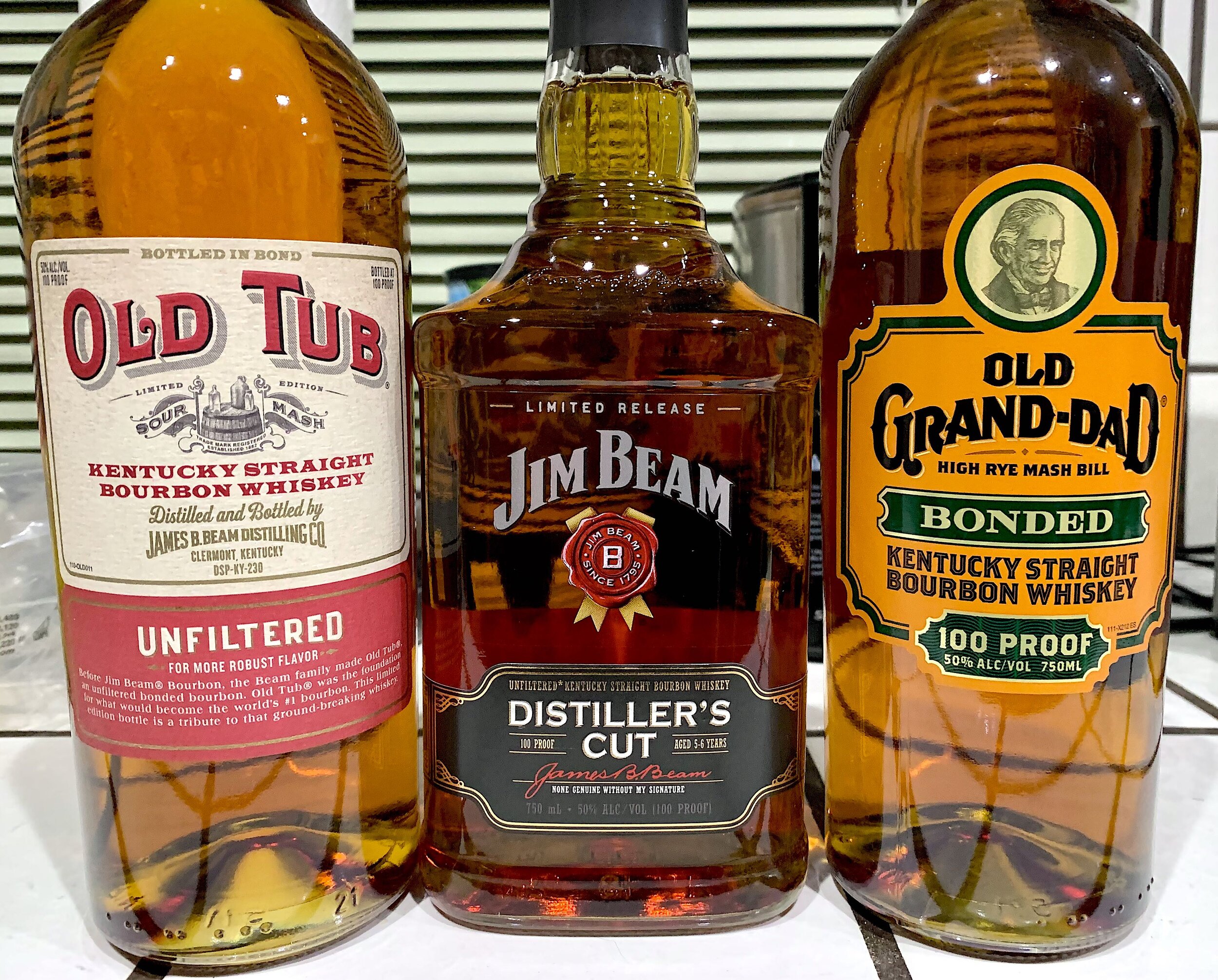
As I was talking to my friend Paul about my excitement over Beam’s Old Tub 100 Proof Bottled in Bond Bourbon this past week, he said to me: “Isn’t it just the same as the Jim Beam Distiller’s Cut, but younger and more expensive?”

Ooof. I don’t know. Is it?

As it turns out, the Jim Beam Distillers’s Cut—at $16.99—uses 100 proof whiskies between 5-6 years of age for a pretty hot price, whereas the Old Tub uses 4 year old whiskies at $18.95. Yes, we’re only talking two dollars and a year or two of difference here, but it’s more the idea of a deal that may or may not be the deal you think it is.

Then another friend said to me: “Why would I buy the Old Tub instead of Old Grand-Dad? Sure it’s a few bucks cheaper, but OGD is already perfect as it is.”

Ugh, will someone please just share my enthusiasm about Old Tub?!

Beam has so many good values already that when they present a new bargain label, they end up competing against themselves! Nevertheless, I was pretty sure that Old Tub’s outstanding flavor would hold up against the other two stalwarts because it’s one of the best $20 whiskies I’ve had in quite some time. But there’s only one thing you can do when presented with such questions, and that’s get a bottle of each one and do a side-by-side tasting.

(As an aside, in my personal experience it’s fun to taste $100+ bottles, but there are few things more exhilarating for me than splitting hairs on $20 bottles of booze to determine the ultimate value.)

First Tasting:

Old Tub: The sweetness of the whiskey is superbly balanced by the graininess. In the same way that old school food wines dial it back in order to pair well with food, the Old Tub tastes like a Bourbon with proper restraint and I appreciate that.

Jim Beam Distiller’s Cut: You can definitely taste those extra few years in wood right away as the sweetness and the richness of the Bourbon comes across instantly on the palate. Unfortunately, it falls short on the finish so it’s sort of a one-trick pony.

Old Grand-Dad: Combine the best parts of the Old Tub with the richness of the Distiller’s Cut, and that’s the OGD. Clear winner.

Before you start putting the OGD into your shopping cart, let me fill in on round two and another important detail you should know: Beam has discontinued the Distiller’s Cut, so I took everything that was left in the warehouse. If that’s something you want to try, do so sooner than later.

Second Tasting (two days later)

Old Tub: An amazing nose, loaded with spice, cinnamon red hots, and tons of sweet oak. More on the palate. So, so, so pleasing.

Jim Beam Distiller’s Cut: Less fragrant on the nose, but plenty of vanilla and oak. Again, sweet up front, thin in the back. Good for $16.99, but wouldn’t be on my short list (plus, I don’t like the bottle, so it would be hidden in my bar behind the others).

Old Grand-Dad: Again, very good, but somehow less dynamic than I remembered it before. Bananas Foster on the nose, more sweet oak, but if I had to choose between bananas and cinnamon, I’m going with the latter 9 out of 10 times. Hence, Old Tub.

I could obviously go back for a third and fourth tasting, and I might feel differently, but after two sittings I can tell you this for certain:

  1. You NEED a bottle of Old Tub. For the price, it’s a hot, hot, hot deal.

  2. Old Grand-Dad is a legendary whiskey for a reason. If you’ve never had it, add that one in, too.

  3. Jim Beam Distiller’s Cut is good, but the specs won’t save you here. Sure it’s older and less expensive, but it doesn’t taste as good as the other two.

  4. Nevertheless, you still may want to buy the Distiller’s Cut as it’s getting discontinued according to my source at Beam.

  5. Given that all three whiskies combined will run you $60, maybe you should just get all three.

-David Driscoll

Delicious, Inexpensive 12 Year Old Single Malt Made With 100% Malted Wheat

hyeland.jpg

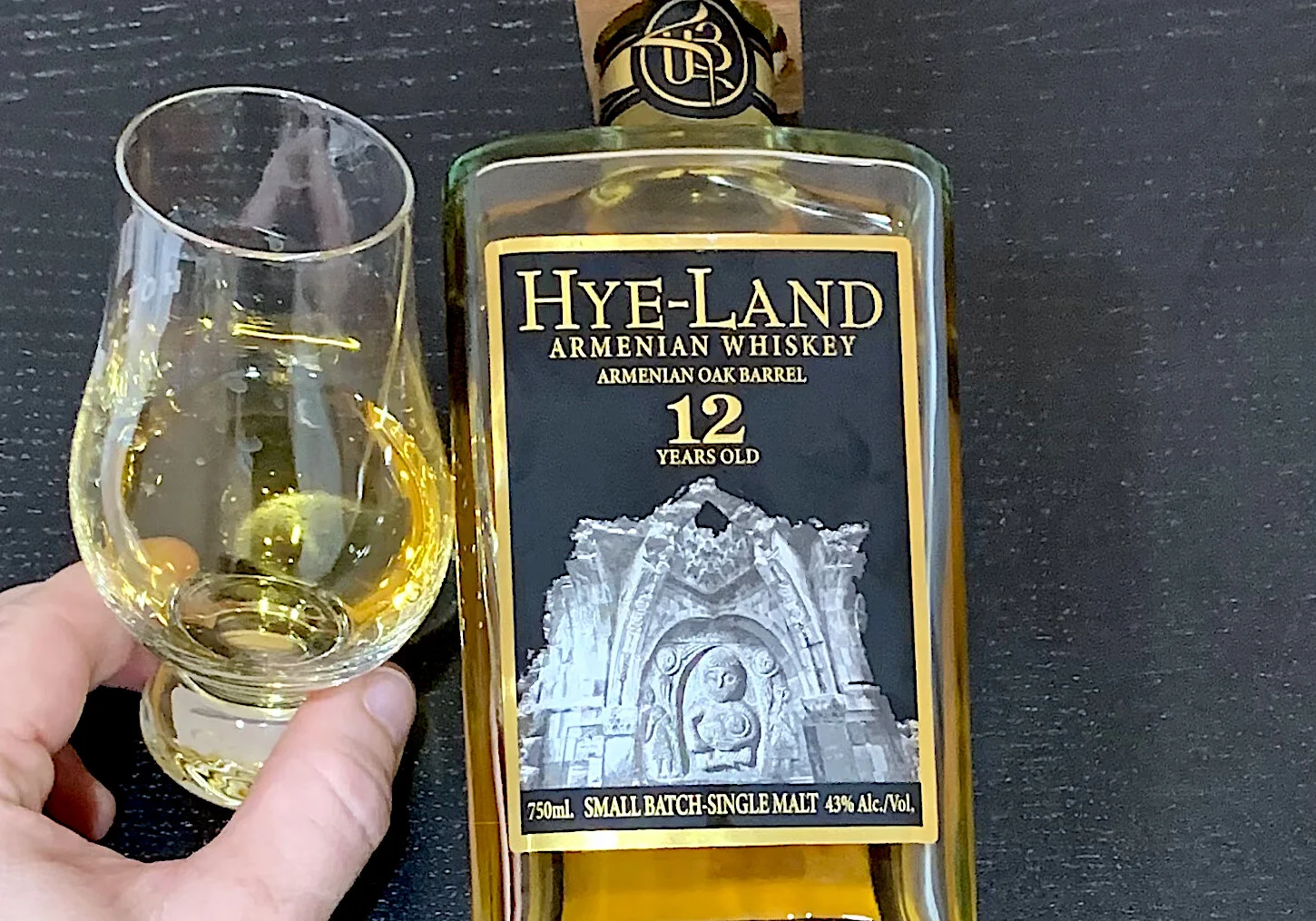
“This is insanely good for the price,” said a friend of mine last week when I let him taste my sample of Hye-Land Armenian single malt. As a Los Angeles bartender with an incredible pedigree, I knew he wasn’t blowing smoke up my ass. He was legitimately impressed.

As was I.

Having poured my third glass at that point, I was trying to figure out if we were both missing something. In no way, whatsoever, had I expected this whiskey to be anywhere near as good as it was, especially given how inexpensive it is. When my boss placed the bottle on my desk last Friday and said, “See what you can do with this,” I thought he was asking me for a personal favor.

If you’re not up to speed on the history of Mission Wine & Spirits, it’s a family-owned Armenian business founded in Pasadena, so I thought maybe he had a buddy back home who needed some help or a family member involved.

Not the case. He just really likes it.

“Is there anything online about it?” my friend queried.

“Unsurprisingly, not much,” I answered; “Yet, the one small tidbit that does exist is a glowing review from the Whisky Advocate of all places.”

“87 Points: The nose offers seasoned oak, citrus, ginger, and allspice. The palate brings sweet notes of melon, coconut shavings, tobacco, Christmas cake, ginger, and clove, all lightly accented by black pepper. The finish is viscous and has balanced sweetness.”

“So they like it, as well,” he added.

No doubt. But where did it come from? Who made it? How? Considering it had to come halfway around the world on a boat, then make its way through the American three-tier system, how in the hell is it so inexpensive?

Here’s the scoop:

  • WHY: Mission is clearly a huge supporter of Armenia and Armenian products as a whole, but our enthusiasm for the new Hye-Land 12 year old Armenian single malt is about more than just Armenian pride. It’s just a flat out delicious whiskey for a HOT price, unique in its soft and creamy profile with a sweet, mealy, grainy profile that mends beautifully with the oak and vanilla spices on the finish.

  • HOW: While most single malt whiskies are 100% malted barley, the Hye-Land whiskey is made from 100% malted wheat, then aged in Caucasus Mountain oak before being finished in Armenian brandy barrels.

  • WHAT: Hye-Land is made at Eraskh Winery and Distillery in the Ararat Valley of Armenia. Known more for its wines, brandies, and vodkas, the facility was established in 1967 roughly 80 miles outside the capital city of Yeraskh in the village of Aralez. The Ararat valley is one of the most ancient agricultural regions on Earth, dating back to Noah and the time of the flood, and its flowing wheat fields, sprawling vineyards, and orchards of fruit trees offer an endless bounty of quality produce for Eraskh’s distillation. All of the wheat used in the Hye-Land single malt is grown locally.

I’ve had plenty of wheat whiskies in my life, but I honestly can’t say if I’ve ever had a single malt wheat whiskey. I worked to create a 100% wheat whiskey with Germain-Robin back in the day, but I don’t remember if the wheat was malted.

What’s the difference, you ask? “Malted” grains have been steeped in water in order to start the growth process, but then dried before the grain can do so, trapping the necessary enzymes and sugars for the fermentation process. When you use unmalted grains for fermentation and eventually distillation, like with American whiskey, producers generally add commercial enzymes in order convert the starch into sugar. Most Bourbon recipes also add in a small percentage of malted barley to the mash to jump start the process and help manage the thick, gummy mash of pure starch.

That’s not to say malted grains are necessarily better, just that purists tend to respect the malting process (especially the old school floor malting method).

But doesn’t single malt whisky have to be made with 100% malted barley? Yes, that’s definitely the case for Scottish single malt. But there are other examples of single malt whiskey made elsewhere from other malted grains, such as the Old Potrero single malt rye whiskey from San Francisco.

A single distillery making whiskey from one singular malted grain is technically a single malt. In the case of Hye-Land, it happens to be wheat.

So do you need this bottle in your collection? The answer is an enthusiastic YES for a number of different reasons:

  1. It’s quite good and it likely tastes like nothing else in your bar. It’s like something in between Scottish grain whisky and American whiskey, with butterscotch and spicy oak. It lacks the weight and the viscosity of single malt Scotch, but it does have richness. And after you’ve taken a few sips, you definitely want more.

  2. From an educational point of view, it’s just cool to have a whiskey made from 100% malted wheat. And it won’t cost you more than $34.99 to take the plunge. That’s a great price.

  3. Armenia has a vibrant food and drink culture. Ararat Armenian brandy is awesome, if you’ve never had it. As is Ararat sparkling water and a number of Armenian wines. The Armenian Lahmajun flatbread I eat for lunch everyday at Old Sassoon Bakery in Pasadena is a taste sensation that explodes on my tongue. I think my favorite part of my new job thus far is the cultural education I’m getting on a daily basis, being surrounded by a majority of Armenians, learning the language and getting a deeper look at the culture.

It turns out that Armenia makes some pretty good whiskey, too. Or at least one really good whiskey so far. I’ll be on the lookout for others.

-David Driscoll